Marcin Sendera
Research Assistant at Jagiellonian University and AI Research Scientist at NASK - National Research Institute. Mila Alumni.
PhD awarded with distinction (May 2026).

marcin.sendera@{gmail.com, uj.edu.pl, nask.pl}
I am a Research Assistant at Jagiellonian University (in the GMUM group, advised during my PhD by Prof. Jacek Tabor) and an AI Research Scientist at NASK – National Research Institute, focusing on AI Safety. Previously, I was a Research Intern at Mila - Quebec AI Institute (2023-2024), under the supervision of Prof. Yoshua Bengio.
In May 2026 I successfully defended my PhD thesis, “Probabilistic deep learning: from efficient sampling to principled generation,” which was awarded with distinction by the committee. The thesis was reviewed by Prof. Arnaud Doucet (University of Oxford / Google DeepMind), Prof. Amos Storkey (University of Edinburgh), and Prof. Piotr Miłoś (University of Warsaw / IMPAN / Mistral AI). The full thesis is available here.
My research focuses on Probabilistic Deep Learning, with a specific emphasis on Diffusion Models and advanced sampling methods like GFlowNets. My core mission is to leverage these tools to build AI models that possess stronger Probabilistic Reasoning capabilities while remaining Safe and aligned. I am particularly interested in how structured generation can bridge the gap between rigorous Bayesian inference and modern deep learning.
I am also trying to advance the (amortised) variational inference methods to allow better probabilistic inference (and Bayesian posterior estimation) in complex, large-scale models like LLMs and Diffusion Models.
Current Research Focus:
Reasoning: Improving reasoning capabilities in generative models via structured sampling.
Diffusion: Developing differentiable Top-K methods for discrete data generation and improving continuous diffusion models.
Safety & Unlearning: Embedding safety constraints and machine unlearning directly into the generative process.
Prior to my PhD, I was a Summer Research Student at the University of Cambridge, working on deep learning for early cancer detection from DNA methylation data.
news
| May 08, 2026 | I successfully defended my PhD thesis, “Probabilistic deep learning: from efficient sampling to principled generation,” (available here) at Jagiellonian University! The committee awarded the thesis with distinction! Enormous thanks to my reviewers Prof. Arnaud Doucet (University of Oxford / Google DeepMind), Prof. Amos Storkey (University of Edinburgh), and Prof. Piotr Miłoś (University of Warsaw / IMPAN / Mistral AI), to my advisor Prof. Jacek Tabor and the GMUM group, and to Prof. Yoshua Bengio and the Mila community. |
|---|---|
| Apr 03, 2026 | The video of my talk at the Lipski Award ceremony is now available online - watch here! I discuss my research interests, the AI Scientist research program, and the potential of probabilistic deep learning for advancing AI for Science. I was awarded the Lipski Award for outstanding young computer scientists in Poland, in the field of applied computer science for my research in probabilistic deep learning. The ceremony took place during ML in PL conference 2025 in Copernicus Science Centre in Warsaw. You can find more information here! |
| Mar 01, 2026 | Started two new positions: Research Assistant at the Faculty of Mathematics and Computer Science, Jagiellonian University, continuing work with the GMUM group; and AI Research Scientist at NASK – National Research Institute, focusing on AI Safety, agentic red-teaming, and probabilistic methods for alignment. |
| Feb 04, 2026 | Our paper “From discrete-time policies to continuous-time diffusion samplers: Asymptotic equivalences and faster training” (with Julius Berner, Lorenz Richter, Jarrid Rector-Brooks, and Nikolay Malkin) has been accepted at Transactions on Machine Learning Research (TMLR)! The paper proves that discrete-time GFlowNet objectives and continuous-time path-measure objectives share a single asymptotic limit, and shows how this enables faster training via coarser random discretisation. You can find the paper here: https://openreview.net/forum?id=xLE3xJUuDO |
| Dec 01, 2025 | I’m heading to NeurIPS 2025 conference in San Diego! Feel free contact and chat about probabilistic deep learning, research, and coffee! |
selected publications
-
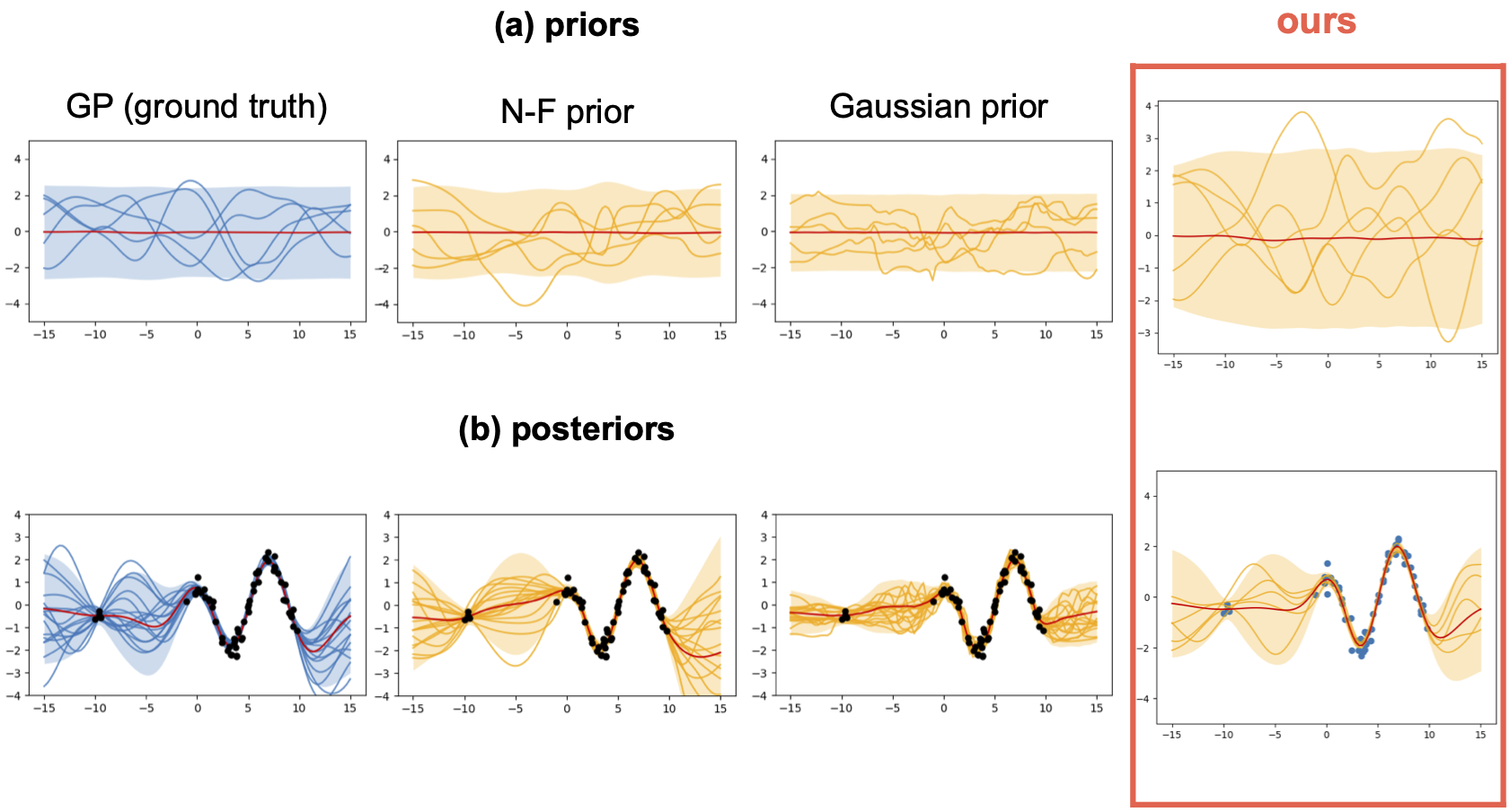
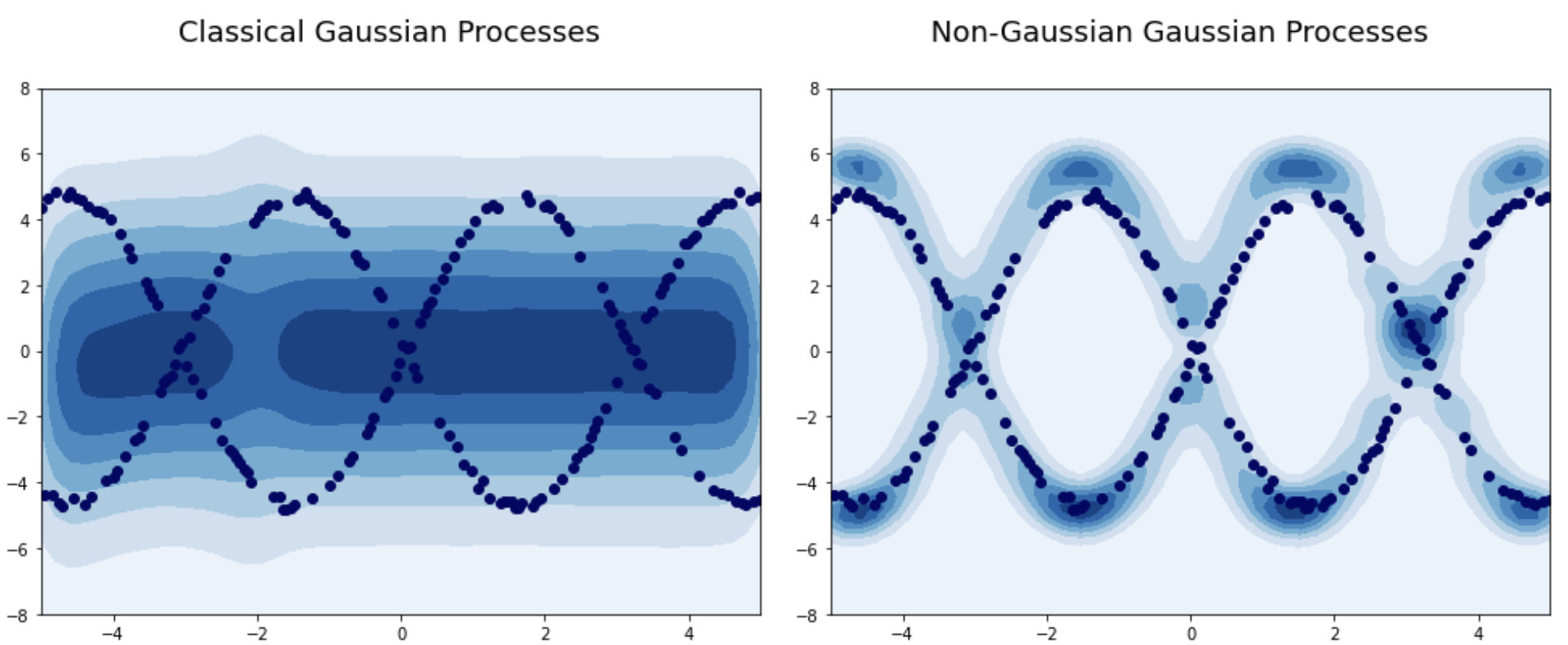 Non-gaussian gaussian processes for few-shot regressionAdvances in Neural Information Processing Systems (NeurIPS), 2021
 -
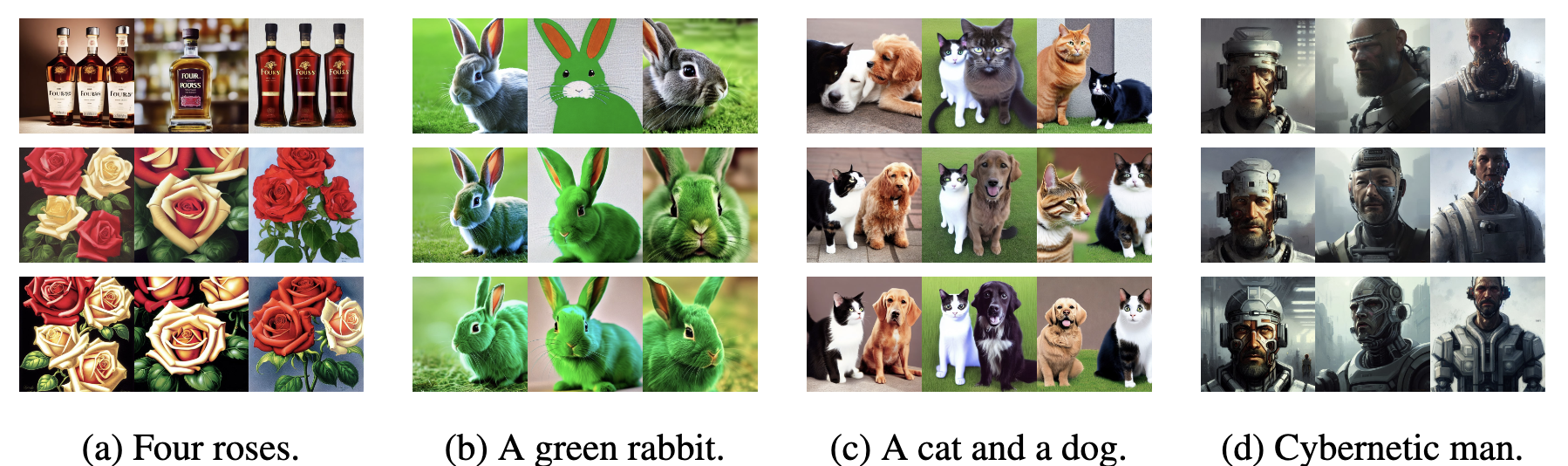 Amortizing intractable inference in diffusion models for vision, language, and controlAdvances in Neural Information Processing Systems (NeurIPS), 2024* equal contribution
 -
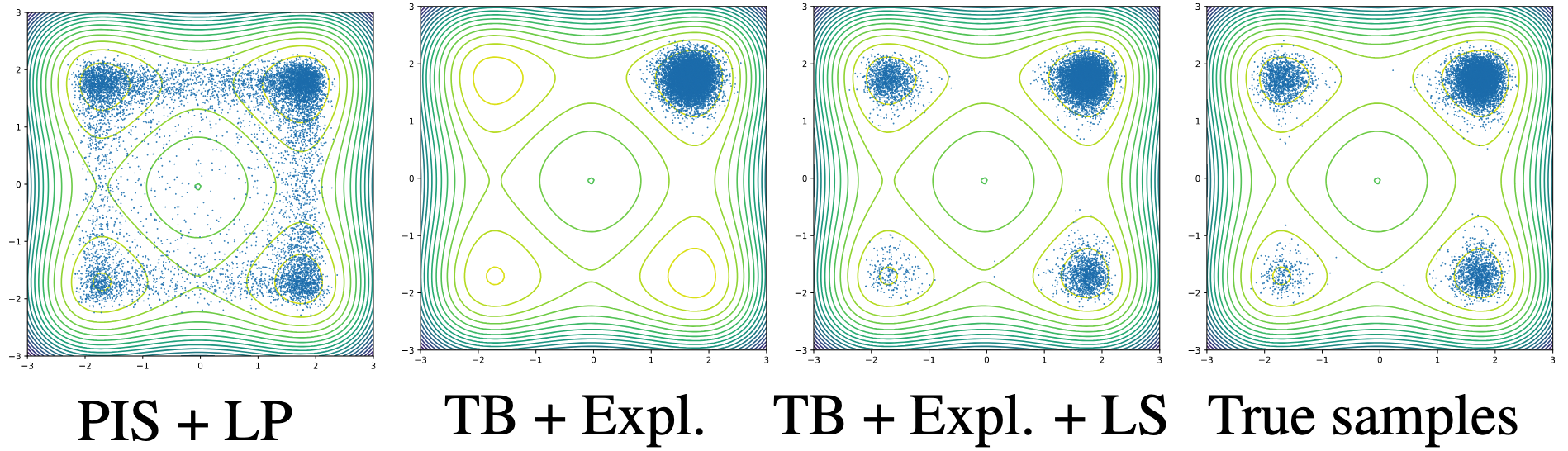 Improved off-policy training of diffusion samplersAdvances in Neural Information Processing Systems (NeurIPS), 2024
 -
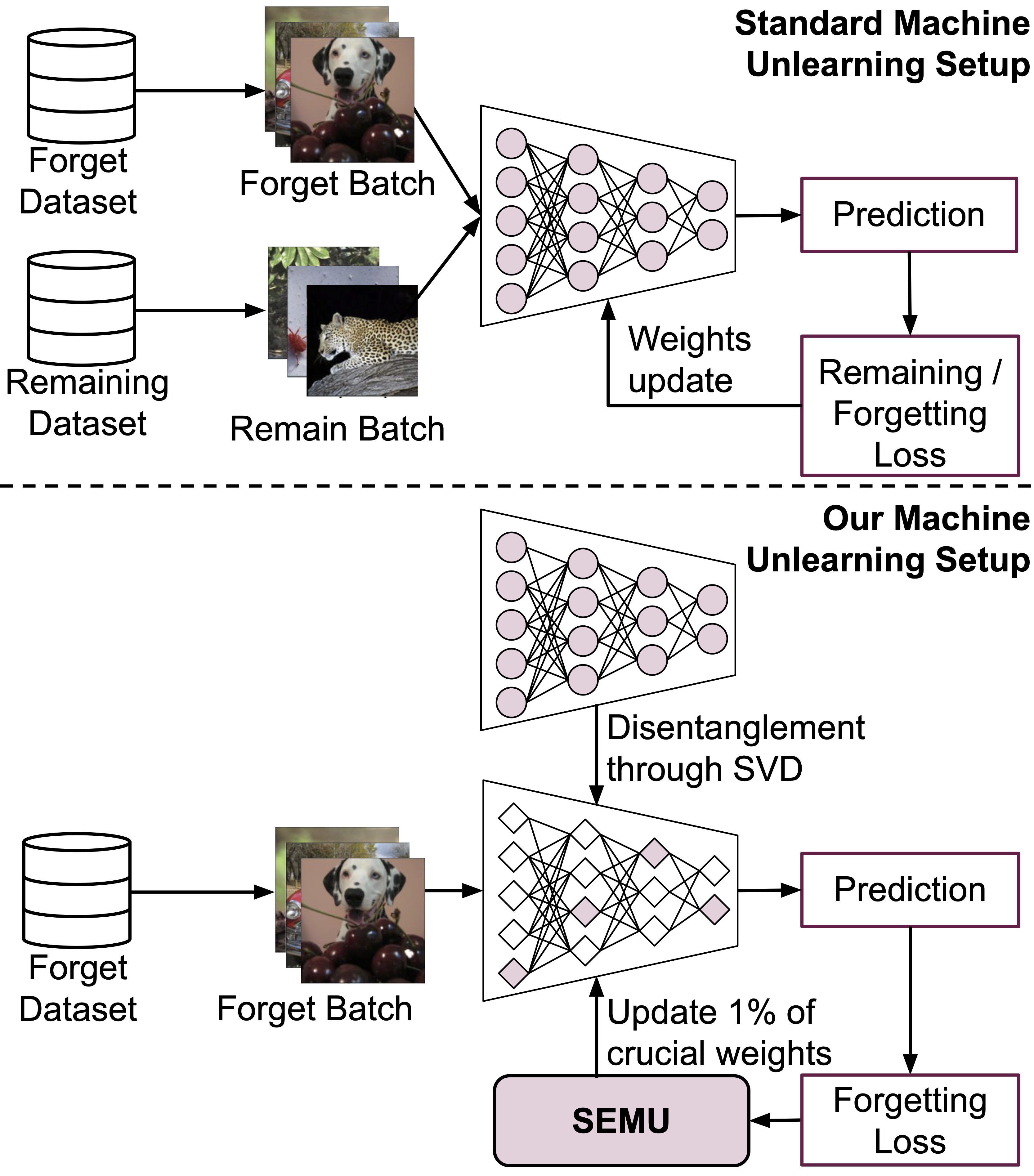 SEMU: Singular Value Decomposition for Efficient Machine UnlearningInternational Conference on Machine Learning (ICML), 2025
 -
 Revisiting the Equivalence of Bayesian Neural Networks and Gaussian Processes: On the Importance of Learning ActivationsIn The 41st Conference on Uncertainty in Artificial Intelligence (UAI), 2025